His Highness The Amir inaugurates the UN’s Conference on Least Developed Countries
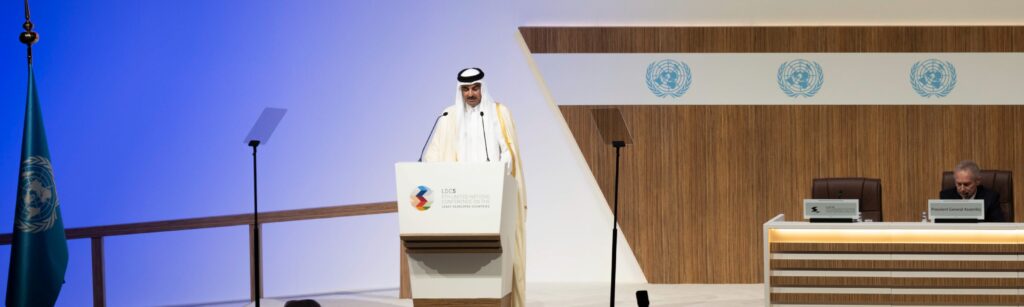
His Highness Sheikh Tamim bin Hamad Al Thani, Amir of the State of Qatar, inaugurated today the Fifth United Nations Conference on the Least Developed Countries (LDC5) held under the theme: “From Potential to Prosperity,” at the Qatar National Convention Centre (QNCC).
The inauguration was attended by heads of state, government officials and representatives, heads of diplomatic missions and senior officials as well as business leaders, decision makers and experts in economics and global development. Representatives from regional and international organisations and other conference guests were also in attendance.
During the opening session, HH The Amir was elected President of the LDC5.
In his inaugural speech, HH The Amir stressed the importance of the Conference, at a time when the world faces serious challenges, from international conflicts and global food crises to the accelerating effects of climate change and the lingering negative impact of COVID-19 variants.
HH The Amir further stressed that this Conference is held in context of the continued suffering of earthquake survivors in Türkiye and Syria, calling for greater solidarity and support to overcome this calamity.
HH The Amir emphasised the need to extend support efforts to the Syrian people, expressing concern at the delays in providing urgent relief.
Drawing on the “No Poverty” theme from the Secretary-General of the United Nations, HH The Amir emphasised the role of international synergy to implement a human development plan at a global level.
HH The Amir also announced the provision of a $60 million financial contribution, $10 million of which were allocated to supporting the Doha Programme of Action activities for the LDCs. The remaining $50 million are to be allocated in support of the Doha Programme of Action’s outcomes and recommendations aimed at building the capacity and resilience of LDCs.
HH The Amir concluded by reiterating: “We are confident that this conference, and by means of building on the successes achieved in the course of realising growth, prosperity and creating sustainable livelihoods, will contribute to supporting the least developed countries’ march towards achieving development therein for the next ten years, in line with the 2030 Agenda for Sustainable Development.”