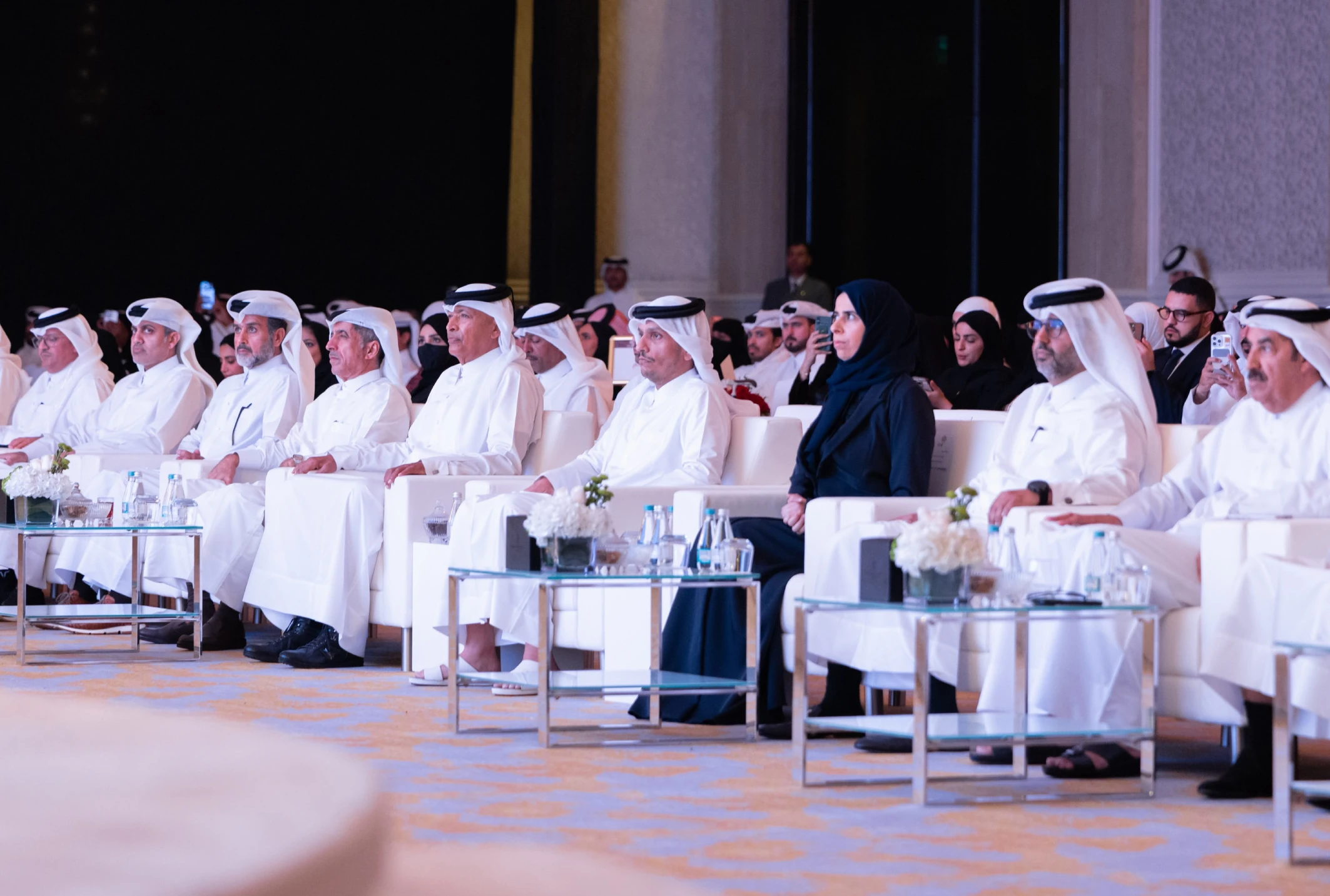
His Highness The Amir inaugurates the 55th Annual Session of the Shura Council
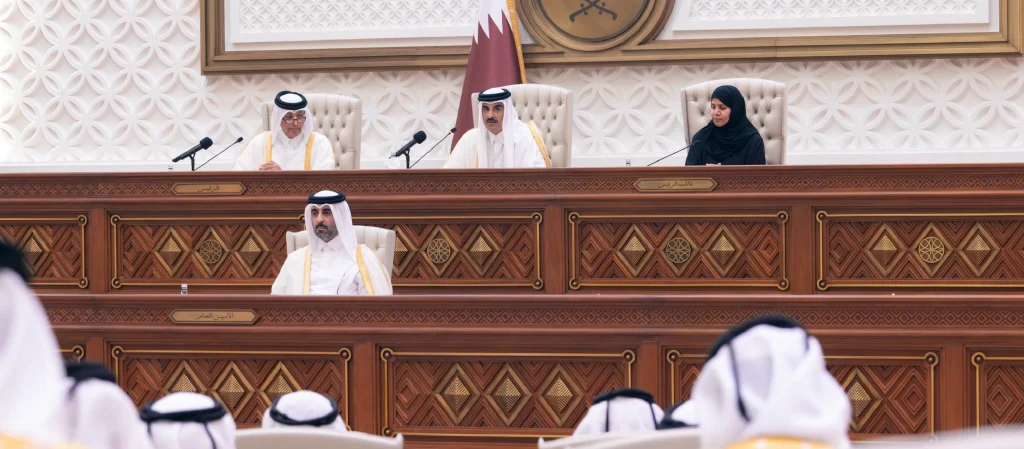
His Highness The Amir Sheikh Tamim bin Hamad Al Thani patronised the opening of the second regular session of the second legislative term, corresponding to the Shura Council’s 55th annual session.
In a comprehensive speech, His Highness set out the roadmap for the next phase, outlined the State’s political and economic priorities, and addressed Qatar’s firm positions on regional and international issues.
HH The Amir opened his speech by remembering the legacy of HH The Late Father Amir, Sheikh Hamad bin Khalifa Al Thani, may his soul rest in peace, saying: “On this occasion, we recall, with hearts filled with faithfulness, the journey of our dear father, His Highness The Father Amir, Sheikh Hamad bin Khalifa Al Thani, may his soul rest in peace, who passed away to the mercy of his Lord this year after a life devoted to serving his country and nation. He led his people through a pivotal period in Qatar’s history, marked by a comprehensive renaissance across various developmental fields, the strengthening of state institutions, the stabilisation of national decision-making, the empowerment of women, and Qatar’s active presence on the global stage.”
Regarding economic affairs, His Highness emphasised that Qatar’s determination to build the nation and safeguard its people’s achievements remains steadfast and unbreakable, adding: “We meet this year in the wake of extraordinary events that have impacted both our country and the region. These events have once again demonstrated the strength of our state institutions, the cohesion of our society, and our ability to respond to crises efficiently and responsibly.”
HH The Amir also praised the efforts of the Qatar Armed Forces, stating: “I would also like to commend our state institutions, our armed forces, and our security agencies, which stood ready—not merely to absorb the shock, but to confront and manage it with courage and competence.”
His Highness noted that Qatar had shouldered three responsibilities simultaneously during this crisis: protecting its sovereignty, fulfilling its role in energy security and the global economy, and keeping the doors of diplomacy open.
His Highness explained: “Our strategy for shouldering these responsibilities consisted of four key elements: first, defending the homeland firmly without being drawn into war; second, maintaining essential services, supply chains, and economic activity; third, contributing to efforts to secure a ceasefire and reopen waterways; and fourth, urging negotiations and seeking opportunities to return to talks to reach peaceful resolutions to the conflict.”
His Highness affirmed: “We ensured that the non-hydrocarbon sectors continued to grow, with their contribution reaching approximately 80% of real GDP. This reflects the resilience of the national economy and its ability to sustain growth under exceptional and complex circumstances.”
His Highness also unveiled a portfolio of projects and investment opportunities valued at approximately QAR 221 billion over the next five years, with the aim of using the recovery as a springboard to accelerate economic diversification and strengthen national capabilities.
Turning to food security, His Highness noted that Qatar ranked first regionally in the 2026 Resilient Food Systems Index, and that support for local agricultural production continues, alongside the development of storage and transport, waste reduction, and a commitment to economic efficiency and quality standards.
On digital transformation, His Highness said that more than 360 new digital services had been developed, and that the central database project had entered the practical integration phase, becoming a unified and reliable national source for policy-making and performance measurement.
Addressing investment in human capital, His Highness highlighted the remarkable progress made by Qatari educational institutions, including Qatar University, Education City universities, and other higher education institutions. He affirmed that the development of the education sector in the country is being followed closely and attentively, including both public and private schools, as well as efforts to meet the requirements of people with special needs.