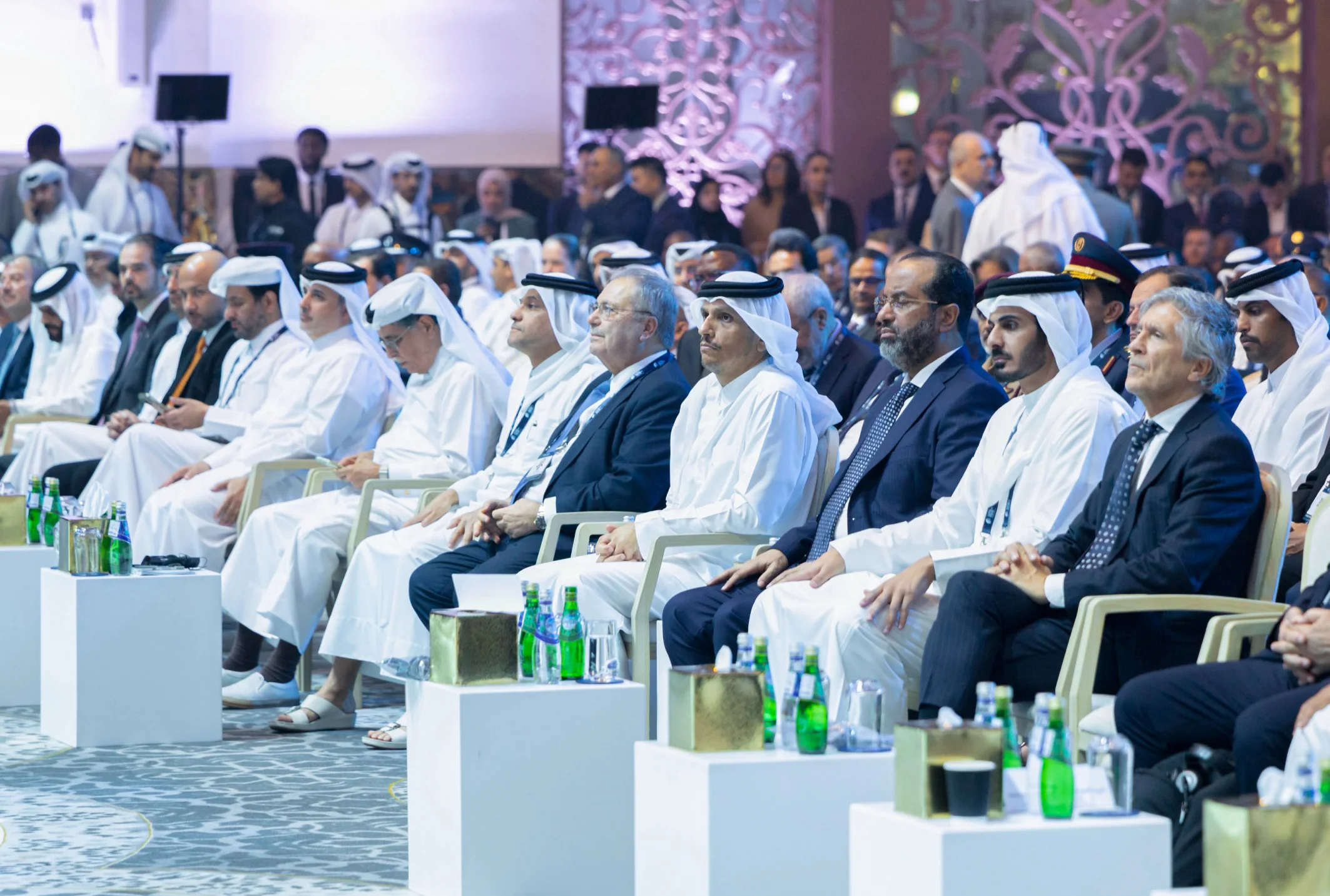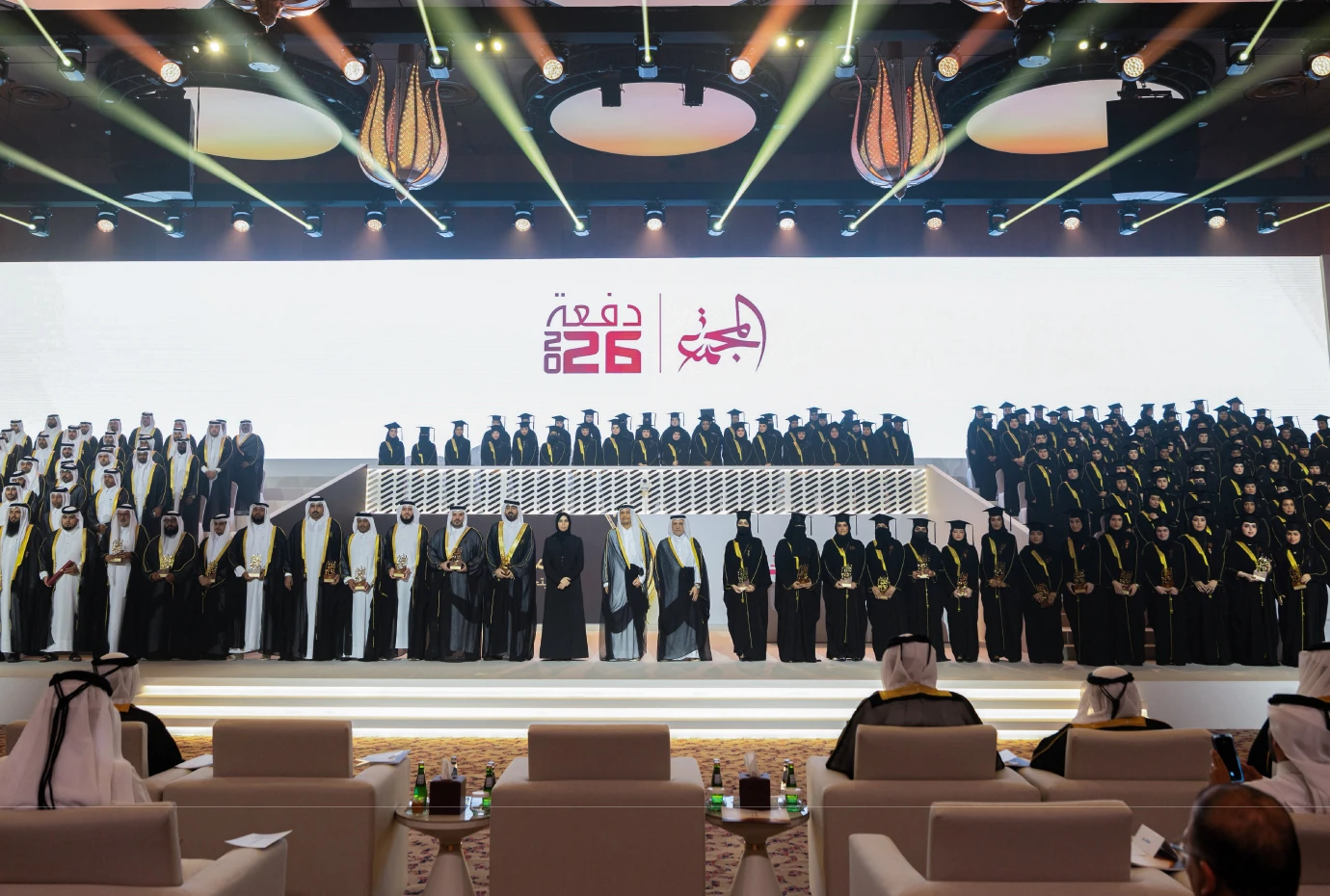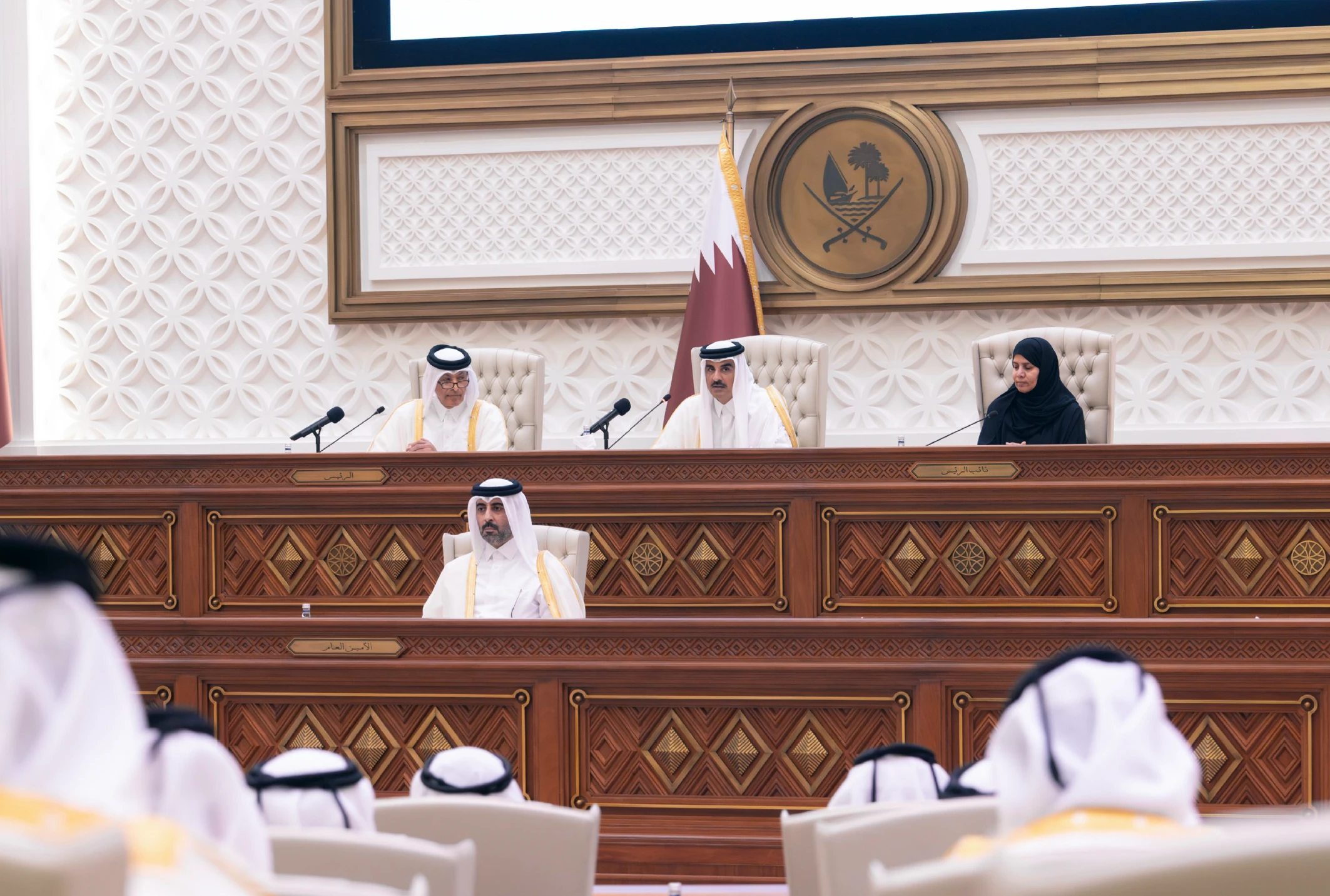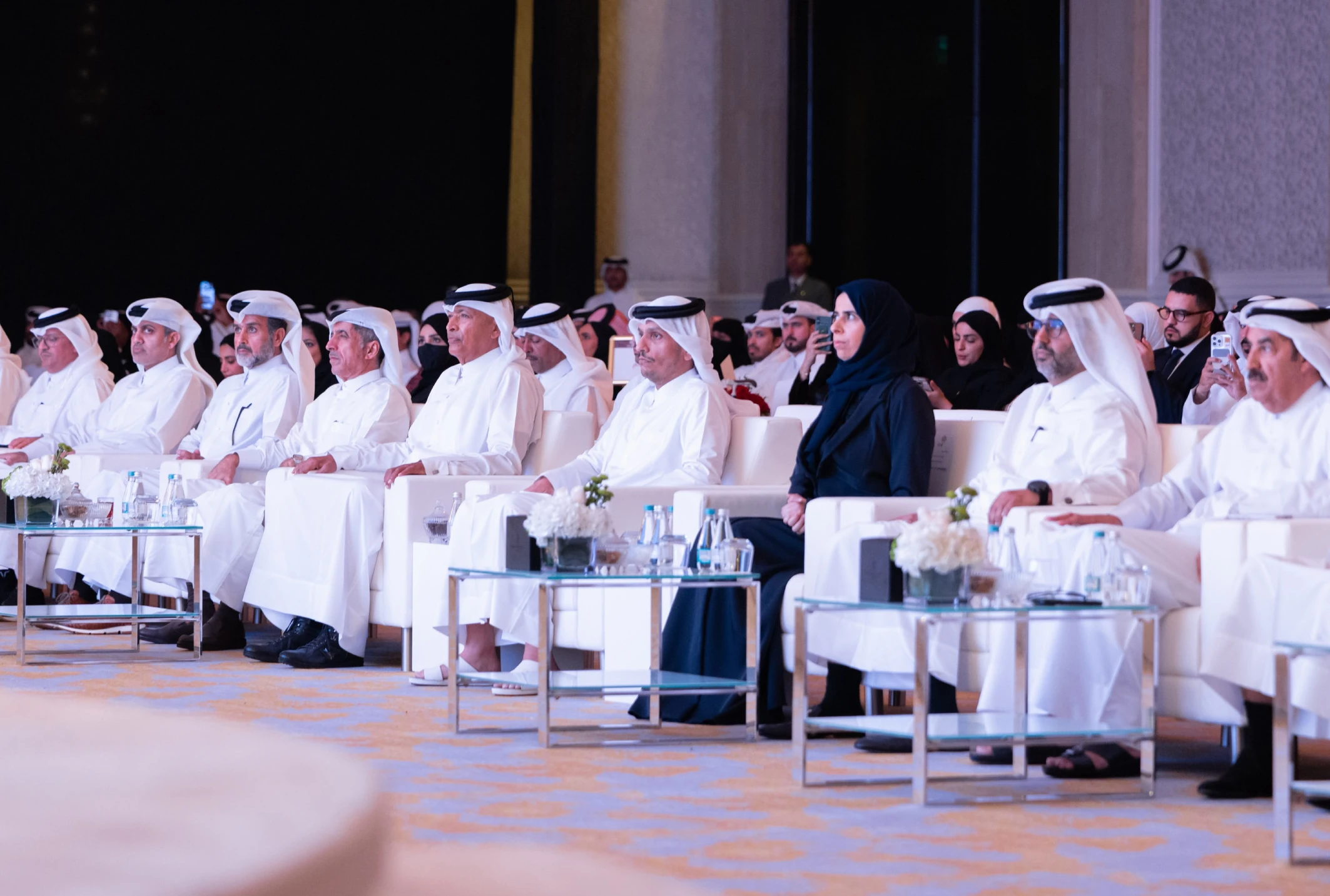
HH Sheikha Moza bint Nasser delivers opening remarks on the first day of Web Summit Qatar 2026
HE Sheikha Al Mayassa bint Hamad Al Thani joins a panel on museums and the knowledge economy
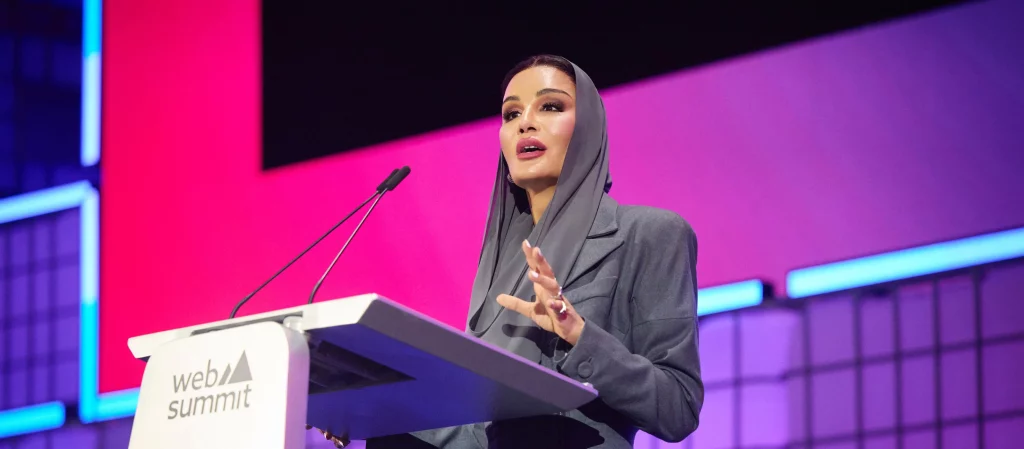
Her Highness Sheikha Moza bint Nasser delivered a keynote on recentering ethics in the age of artificial intelligence during the first day of the third edition of Web Summit Qatar, which runs until 4 February.
She emphasised the importance of human values, ethics, and accountability in the face of rapid advances in artificial intelligence, calling for responsible, human-centred leadership.
Her Highness highlighted linguistic diversity as essential to building technologies that reflect different cultures, underscoring that language goes beyond communication to serve as a foundation for judgment, justice, empowerment, and shared values.
She added that the Arab world is experiencing a rare historical moment that demands more than resources and requires trust between people and institutions, and confidence in the Arabic language and its enduring creative capacity. She emphasised that Arabic now stands at a decisive crossroads in the age of technology.
Speaking on Qatar’s focus on technology and artificial intelligence, HH said: “We must return moral leadership to humanity and ensure that technology is guided by values, not operating beyond them. Used responsibly, technology can function as an early warning system and a tool to safeguard civilians, whether in conflict zones or in safe city streets.”
A panel discussion brought together HE Sheikha Al Mayassa bint Hamad Al Thani, Chairperson of Qatar Museums and Michael Govan, CEO and Wallis Annenberg Director of the Los Angeles County Museum of Art, focusing on the role of museums and cultural institutions as engines of creativity and foundations of knowledge-based economies.
The session also underscored Qatar’s cultural development model and its efforts to elevate local culture within a globally interconnected cultural landscape.
HE Sheikha Al Mayassa said: “For technology to thrive, it needs art and culture. For art and culture to thrive, they need technology. They are two sides of the same coin. We have invested in technology within our existing infrastructure, in museums, creative hubs, and platforms to create an urban environment for innovation to thrive. Everything we do has become a national, interdisciplinary effort, bringing people and ideas together.”
She noted that Qatar launched a long-term vision that places humans at the centre of progress. “Everything we do is an investment in enhancing the capability of the population living in Qatar, whether Qatari or residents,” HE added.
HE highlighted that the first chapter of Qatar’s 25-year vision focused on national identity and heritage, starting with the Museum of Islamic Art, followed by Mathaf: the Arab Museum of Modern Art, and the National Museum of Qatar. She added that while this chapter has been delivered, its impact continues to fuel new spaces for creativity and innovation.
Eman Al Kuwari, Director of Digital Innovation at the Ministry of Communications and Information Technology, participated in a panel focusing on data governance, regulation, and safe cross-border data use in the age of artificial intelligence.
Moderated by TechCrunch journalist Ivan Mehta and joined by Florian Mueller, Head of AI, Insights, and Solutions EMEA at Bain & Company, the session outlined practical pathways for building sovereign, multi-level AI models and their supporting infrastructure.
Eman Al Kuwari said: “In Qatar, sovereign AI is driven by four values: citizen-centricity, economic diversification, cultural preservation, and responsible governance. These principles shape every program decision that we are driving in the country.”
The Ministry of Communications and Information Technology hosted a session titled “Qatar’s digital agenda 2030: Building a knowledge-based digital economy,” with the participation of senior ministry officials, including Duha Al Buhendi, Director of Digital Society and Digital Competencies; Khalid Al Jumaily, Public Relations and Communications Director; and Faraj Abdulla, Director of Digital Economy.
We must return moral leadership to humanity and ensure that technology is guided by values, not operating beyond them. Used responsibly, technology can function as an early warning system and a tool to safeguard civilians, whether in conflict zones or in safe city streets.
The session showcased Qatar’s Digital Agenda, outlining practical pathways to convert strategic vision into real-world impact on jobs, skills, and economic growth, and emphasised the Ministry of Communications and Information Technology’s efforts to accelerate change through strategic pillars and innovative programs for a sustainable digital future.
A panel featuring Abdullah Hamad Al Misnad, Chairman and Managing Director at Qai and Mohammed Hashem, Presenter at Middle East Eye, examined Qatar’s growing AI ecosystem and its ambition to position itself as a global leader in artificial intelligence solutions.
Abdullah Al Misnad emphasised Qai as a cornerstone of Qatar’s sovereign AI strategy, focused on advanced infrastructure and talent development to promote innovation and accelerate digital transformation.
He said: “Qatar invested early in artificial intelligence, particularly within academia and research. Over the past two years, the country has focused on deploying AI, and we have worked closely with government entities, especially the Ministry of Communications and Information Technology, as well as with the private sector to explore and implement AI solutions.”
A panel discussion on the role of strategic collaboration between entrepreneurs, investors, and innovation hubs in building an integrated innovation ecosystem featured Mohammed Abdulsalam Al Emadi, Executive Director of Incubation and Venture Capital at Qatar Development Bank; Burak Daglioglu, President of the Investment and Finance Office at the Presidency of the Republic of Türkiye; and Timothy Rowe, Founder and Chair at Cambridge Innovation Center. The discussion examined global capital flow trends and identified the core enablers that allow startups to scale and grow amid an increasingly complex global environment.
Mohammed Abdulsalam Al Emadi said: “Over the last few years, Qatar put clear strategic objectives for boosting innovation, investing in startups, and encouraging the private sector and international investors to join the efforts.” He added: “We are blessed to have a complementing ecosystem with our peers and neighbours.”
Amira Zahra Imouloudene, producer and presenter at Al Jazeera Media Network, moderated a session with Dr Khalifa Al Yafei, CEO of the Qatar Finance and Business Academy, focusing on Qatar’s model for driving sustainable, diversified growth through education, innovation, technology, and international partnerships, in line with Qatar National Vision 2030.
A session hosted by Hamad Bin Khalifa University (HBKU) and led by Prabhat Hajela, Provost at HBKU, highlighted how artificial intelligence is reshaping education and research, stressing the central role of universities in reimagining curricula and content to support future-ready, AI-enabled, and immersive learning environments.
The summit also featured a dialogue session hosted by Chris Williamson, host of the Modern Wisdom podcast, with Andy Kelly, EVP of Global Brand Partnerships at iHeartMedia, focusing on the power of audio content and its role in shaping culture. The discussion outlined the effectiveness of long-form audio in sustaining audience attention, audio’s unique capacity to build trust and shape identity beyond text and visual media, as well as the responsibility of content creators and the future of human connection in the age of artificial intelligence.
On the main stage, Eduardo Saverin, Co-Founder of B Capital and Facebook, joined Raj Ganguly, Co-Founder and Co-CEO of B Capital, and Justin Smith, Co-Founder and CEO of Semafor to discuss B Capital’s expanding footprint across the MENA region from its Qatar headquarters, the launch of its MENA-South Asia fund, and how capital and talent can combine to power the next generation of global companies.
The summit’s first day featured a podcast session hosted by Prameet Dhaliwal, spotlighting the journeys of leading women and entrepreneurs from across the globe. With contributions from Charlotte Cijffers, Chief Digital Officer at ITP Luxury Group and Lamis Abualkheir, CEO and Founder of FoodSwap, the session underscored how women are driving innovation, entrepreneurship, and positive change worldwide.
On the central stage, Cristobal Valenzuela, Founder and CEO of Runway, underscored the role of visual experience from the natural world in advancing understanding across physics, biology, and the material sciences, cautioning against overreliance on language models that simply mirror existing human knowledge.
Caroline Faraj, VP at CNN and Editor-in-Chief at CNN Arabic led a dialogue with Yanis Varoufakis, former Greek Finance Minister and Ramesh Srinivasan, Professor and Author at UCLA, exploring the erosion of capitalism and the possible emergence of alternative systems, while warning that these alternatives may be worse than the existing model.
During the opening night and first day of the summit, 22 memoranda of understanding were signed between Qatari and international entities, reflecting the summit’s role as a catalyst for cross-border collaboration.
Notable agreements included MoUs between Qatar Foundation and Web Summit, Invest Qatar and EnergyX, a global leader in energy efficiency for buildings and infrastructure, as well as the Qatari Businesswomen Association and the GCC Regional Office of the German Association for SMEs.
The second day of the summit will feature a dynamic line-up of panel discussions, the launch of a new venture by Snoonu, and in-depth discussions on the future of journalism led by prominent media organisations, including Al Jazeera Media Network. The program will also explore lessons from the FIFA World Cup Qatar 2022 and evolving approaches to marketing in the digital age, underscoring Web Summit Qatar’s role as a global platform for ideas and innovation and a driver of a knowledge-based economy, in line with Qatar National Vision 2030.